Definition
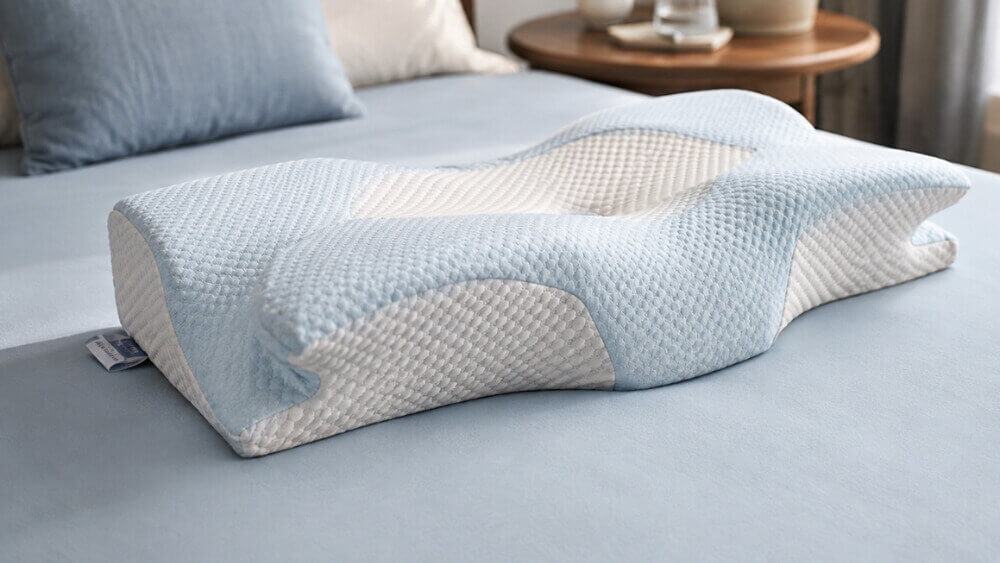
A cervical pillow is especially beneficial for patients with neck, shoulder, and upper back problems. It has a raised edge or a comfortable shape—often in a central cradle. Using a cervical pillow with the correct dimensions helps keep the head properly aligned with the spine, which reduces strain on the neck joints, muscles, and discs. The primary goals are to reduce neck, shoulder, and back pain. These cervical pillow benefits also reduce morning headaches linked to poor sleep posture. By ensuring proper alignment, a cervical pillow can also improve sleep quality, decrease snoring, and support post-injury or post-operative recovery.
For example, when my brother was a 34-year-old banker, he worked long hours at his desk and enjoyed sleeping on a low-height, flat, plush pillow. In light of his side-sleeping habit and the nature of his work, I have advised him many times to change his pillow. He often woke up with stiffness in his neck. He switched to a medium-high cervical pillow with a center cradle. After six days, my brother didn’t feel his neck stiff in the morning.
Neck Pillows or Cervical Pillows Benefits
Following is a list of the benefits of cervical or orthopedic pillows.
Shoulder, neck, and Upper Back Support
The most significant advantage of a cervical support pillow is that it supports multiple essential areas of your upper body simultaneously. Not only does it cushion your head, but it also supports the natural curves of your neck, upper back, and, in some cases, your shoulders. This depends on the pillow shape.
Filling the gap between the neck and the bedsheets, this pillow prevents your head from tipping forward, backward, or sideways throughout the night. It supports the small neck joints and deep neck flexors.
Reduce the Muscle Tension
When the head is supported in neutral, the shoulder and neck muscles don’t need to bear the head’s weight. The muscles feel relaxed, improving blood circulation, and reducing neck stress.
Support Pillows for Different Sleeping Positions
Back Sleepers Who Need Better Neck Support
If you sleep on your back, choose a low-cervical pillow. This slim pillow keeps the chin, neck and spine neutral.
Side Sleepers Who Need Proper Spinal Alignment
The side sleeper’s cervical pillow will be sized based on one’s shoulder height. Having more pillow loft or a thicker pillow is ideal for broad-shoulder sleepers. A contoured edge fills the space between the shoulder and head, thereby preventing the neck from curving and ensuring better sleep.
Multi-Position Sleepers
If you switch positions while sleeping, choose a medium-high and medium-firm pillow to maintain spinal alignment in all positions. The right pillow for multi-position sleepers supports your neck’s natural curve and prevents neck strain.
Less Morning Stiffness
When anyone selects the right cervical pillow for sleeping, his spine, joints, muscles, and soft tissues stay in comfortable and healthy positions. Many users notice that they can turn their heads more comfortably than the previous night’s neck stiffness.
Improves Sleep Quality and Comfort
Comfort is the key to sound sleep. If your pillow doesn’t support your head properly, you may have to move around a lot to find a comfortable position during sleep. This may disturb your sleep, cause neck pain, and leave you feeling groggy the following day. A cervical pillow provides more balanced support, minimizing movement during sleep. By keeping your shoulders and neck supported, you can relax and sleep more deeply.
Types of Cervical Pillows and Materials
Contoured Memory Foam Pillows
Memory foam pillows featuring a traditional dual-lobe design cradle the head and provide supportive neck alignment. Memory foam’s soft, supportive consistency is an ideal sleeping surface. In this position, air flows freely through the filling to keep uncomfortable heat away from your body. Contemporary open-cell foams and perforations improve pillow comfort and increase airflow. Among those pillows, firmness options range from soft (excellent for back sleepers) to firm (great for wide-shouldered and side sleepers). These cervical pillows are breathable, non-toxic, odorless, and cool; they support the neck and head, improve sleep, and are suitable for most patients with neck pain.
Latex Cervical Pillows
Latex cervical pillows are widely used because they provide excellent comfort, support, breathability, and long-lasting durability. These pillows are naturally bouncy, so they don’t lose shape or sag over time as many traditional pillows do. This allows them to provide comfortable head and neck support nightly without frequent replacement. Latex’s firmness prevents head sinking, which
Fiberfill/Down Alternative Cervical Pillows
Polyester microfiber is like down, and allergies are easily managed with machine washing. They are compressible, so they are comfortable to lie on and breathe through. However, they don’t have molded neck support and may require fluffing; they are ideal for plush or back sleepers.
Hybrid Options
A cervical hybrid pillow provides a supportive core (whether made of memory foam or latex) with adjustability around the fill, like adjustable layering or lofts you can remove to customize.
Doctor’s Advice About Choosing the Right Cervical Pillow
If you’re unsure which category fits, pick the adjustable model first. Select your cervical pillow, and use it for 3–4 nights. Then you can decide which dimension is suitable for you. But once you’ve experienced it, you can quickly determine for the first time which pillow is most suitable for relieving neck discomfort or pain. Rapid daily adjustments make it difficult to interpret what’s helping. Take shoulder-to-neck measurements and note mattress firmness.
When Using a cervical pillow, it May Not Help
However, it is not ideal for everyone—especially stomach sleepers, numbness, or pain after an injury, fracture, or arthritis-related inflammation. A new pillow won’t resolve structural or neurological issues. You should see a doctor if you experience the following:
- Neck and shoulder pain that doesn’t change after a using cervical pillow & home remedies
- The patient may also present with numbness or muscle weakness in the arms or hands.
- Unexplained weight loss, seizures, fever, or systemic symptoms
- A history of cancer or a recent serious injury may require medical evaluation.
Frequently Asked Questions
Which pillow loft is ideal for side and back sleepers?
Conduct your own research and measure the neck-to-shoulder gap in relation to the firmness of your bed. Generally, if you sleep on your side with wide shoulders, you will need extra loft; for back sleeping, you will want less. Your chin should neither be tucked nor pointed out to support your neck and spine in a neutral position.
What features should a pillow have if you experience chronic neck pain?
Look for support that holds its shape without pressure points. It conforms to the most common sleeping positions and provides close support.
Should you sleep on a cervical pillow?
Sleeping on a cervical pillow can be beneficial when the pillow’s height, shape, and firmness suit your sleeping position. A good cervical pillow will support the natural alignment of the cervical spine and maintain an optimal head and neck position during sleep, reducing neck pain and promoting better sleep.
Are Cervical Pillows For Combo Sleepers and Tossing-and-Turning Sleepers?
Yes. Search for dual-lobe contour designs or adjustable lofts to keep your rolls in line. The shoulder gap-filling edge aids you when you’re on your side; a lower, mildly contoured ridge on the other side helps support you when you’re on your back.
Final Words
Cervical pillows are designed to preserve the neck’s natural curve while sleeping, offering proper support. They provide neck, shoulders and back pain relief while reducing painful muscle tension, as well as nerve pressure and irritation. What size of cervical pillow should you use for optimal sleep and a pain-free life? It depends on the user’s body structure, mattress features and your sleeping positions. “You’re not treating anything, but you are,” it says about an ergonomically sound cervical pillow. This pillow, when used in combination with daytime ergonomics and gentle exercises to maintain mobility, is likely to improve sleep quality and neck comfort for many people.