New or unfamiliar users do not have a clear idea about whether a memory foam pillow is good or bad for sleeping and room design. The answer, for many experienced sleepers, is yes, or at least for those who desire pressure relief, better muscles, veins, and neck support. Furthermore, it serves as an essential part of the interior design of your bed, helping to refresh you and your family members’ minds.
What is a Memory Foam Pillow?
Memory foam is a viscoelastic polyurethane foam that softens the pillow in response to the amount of heat and weight of your body. The foam used in other types of pillows compresses quickly and bounces back instantly. But memory foam has a slower recovery rate, which means the surface of the pillow remains flat. Memory foam pillows can help with neck, shoulder, and back pain by adapting to your shape. These pillows offer more support and better spinal position than traditional pillows. This can be particularly helpful for back and side sleepers to provide support during sleep.
History of Memory Foam Pillows
Memory foam began in 1966, when NASA engineer Charles Yost developed a soft foam that absorbs jolts from airplane seats. The goal was to develop foam that could more evenly distribute weight, enhance comfort, and reduce the risk of injuries in a crash. It was also used in medical applications, such as wheelchair seats, hospital
What Are Normal Pillows?
A “normal pillow” typically refers to conventional pillows filled with materials like polyester fiber, cotton, down, feathers, foam, microfiber, or any other firmer material. These pillows are soft, fluffy, and can be shaped by hand. But conventional pillows are not all equal. They may flatten, sag, or develop lumps over time. If a pillow loses its loft, the head can sink into the pillow, causing neck and shoulder pain. This can cause neck and shoulder pain.
Memory Foam vs Normal or Regular Pillow
The table below shows the differences between comfort, support, shape, durability, and price.
Comparison Table: Key Differences
| Feature | Memory Foam Pillow | Normal Pillow (Fiber/Polyfill/Cotton/Basic Foam) |
| Support & spinal alignment | Shape of your head and neck; generally more able to keep the neck in a straight direction. | Varies a lot; tends to compress and might not maintain consistent alignment. |
| Shape retention | Shapes are comfortable to hold. | Easily loses its shape. |
| Comfort feel | Some find hugging/cradling too firm. | Users may feel soft and comfortable. |
| Loft options (height) | Usually consistent loft; some are adjustable (shredded memory foam Pillow) | Wide variety; many are easy to “fluff” to change loft temporarily |
| Odor/off-gassing | Possible “new pillow” smell at first (usually fades) | Usually minimal odor (varies by material) |
| Price | Usually mid to higher | Often lower, with premium options available (down, latex blends, etc.) |
Benefits of a Memory Foam Pillows
Pressure Relief for the Shoulders and Neck Pain
Memory foam pillow reduces stiffness and neck and shoulder pain by distributing the weight over a large area.
Effects on Spinal Alignment
Everybody’s spine has natural curves. A perfect matching pillow maintains those curves for healthy support. It is most effective for side sleepers and back sleepers because memory foam fills the gap between the neck and the bed sheet.
Impact on Sleep Quality
Sleep quality largely depends on the nature of your work, pillows, mattress, etc. Support and comfort are personal choices for every sleeper, but many on our team say they wake up uncomfortable with their imperfect pillows. When the memory foam pillow maintains its proper height and shape, it can reduce morning stiffness for some sleepers and ensure a good night’s sleep.
Aesthetics and Bedroom Décor
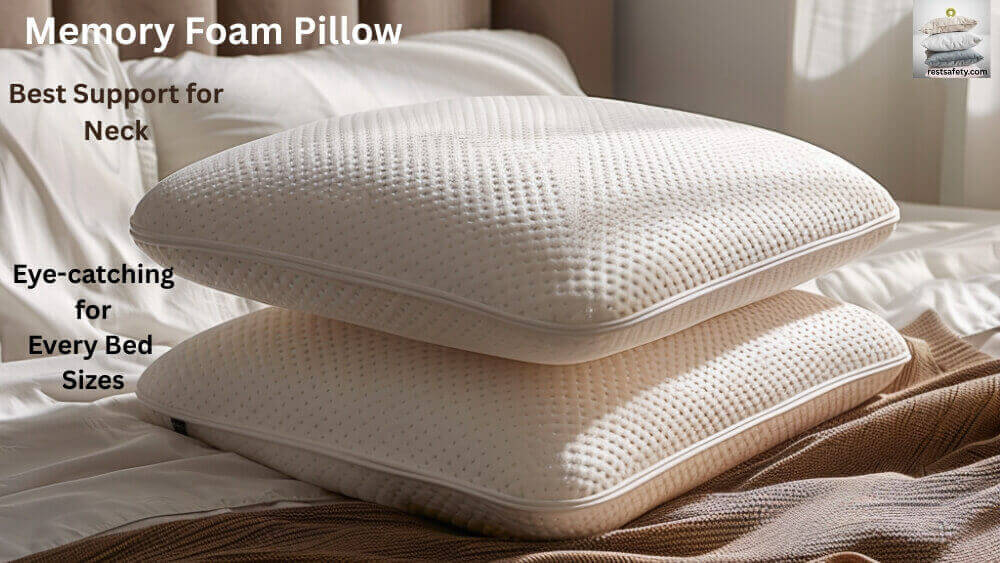
Modern memory foam pillows have stylish covers, cooling fabrics, and attractive edges that look eye-catching on a bed.
Versatile Options
Memory foam pillows are available in a variety of sizes, colors, firmness levels, and shapes. So sleepers can select their preferred pillows.
Removable/Washable Covers
All pillow types require washable outer covers. Sleepers should look for breathable knits (bamboo viscose, cotton, or Tencel) and well-built zippers if the pillow is adjustable.
Pillow’s Density (lb/ft³)
Higher-density memory foam pillows generally mean enhanced durability and deeper contouring, but it often feels firmer and warmer.
Hypoallergenic and Dust Mite Resistance
Memory foam not only relieves pain but also reduces dust mite exposure, relieving allergies. Use a tightly woven allergy cover and wash pillowcases every 2-3 days in hot water to reduce allergens.
Drawbacks of memory foam pillows
Heat Retention
Traditional memory foam pillows trap body heat due to their materials and feel warm at night, especially for hot sleepers.
Odor and Off-gassing of New Pillow
New memory foam often has a chemical smell (off-gassing) from the release of volatile organic compounds (VOCs). It naturally lasts for 24-72 hours. Some higher-density pillows may take up to one week to lose an unexpected smell.
Firmness and Weight
Memory foam can feel extremely firm, especially for users who use traditional pillows. If the loft or firmness isn’t matched to your body and sleep position, it may cause neck pain.
Average Life Span
A memory foam pillow usually lasts for two to four years. The life span of those pillows largely depends on the foam density, how often you use them, care, and also your climate.
Frequently Asked Questions
Would you be comfortable with memory foam, down, or latex Pillows?
Memory foam
It is extremely effective when you need deep contouring, uniformity, and relief from neck or shoulder pain. That is what they are most expected to do, except for users who like firm pillows.
Down/Down‑alternative
These pillows are excellent for a soft, comfortable, easily moldable feel—especially for stomach sleepers.
Latex
Latex pillows are ideal for cooler sleep, buoyancy, and sinking less. Consider the pillow’s shape and size, the support it provides for your bed styling, and how warm you sleep.
Will a memory foam pillow cause you to feel hot–and what cooling alternatives can help?
Conventional memory foam captures heat in the body. To stay cooler, seek out ventilated cores, shredded foam, or breathable covers (bamboo, cotton, Tencel). Gel foams containing graphite are cooled initially, whereas open-cell foams breathe more regularly throughout the night.
How does shredded memory foam differ from solid memory foam?
Shredded
You may add or remove filling to shape the loft to your health and bed design requirements; it breaths better and accommodates combination sleepers.
Solid
This solid memory foam pillow provides good cervical support and good predictability. Once you know the ideal pillow height, selecting the right memory foam pillow is the wise choice.
Is off-gassing safe, and how do you eliminate the odor?
There is a slight factory smell to these memory foam pillows that fades away after a few days of use. If you are sensitive, keep pillows in an open area for 24 to 72 hours before using them. Wash the cover, place a breathable protector, and allow airflow/sunlight to dispel odors.
What is the right way to keep memory foam pillows fresh?
To maintain memory foam pillows‘ freshness, use a zippered protector, wash pillow cases weekly, wash removable covers as directed, and keep humidity at 40-50%.
Choosing the Right Memory Foam Pillows
When waking up with neck pain or stiffness, consider your sleeping posture before falling asleep and when you wake up. The choice of pillow must be based on your sleeping position. Sleeping on the side often requires a memory foam pillow with a high loft to fill the gap between the shoulder and the head. Medium loft pillows with soft cervical support should be used by back sleepers to maintain the natural neck curve. Stomach sleepers often require a very low loft pillow, as any thick pillow can twist the neck and cause pain. Additionally, hot sleepers should consider the breathability of their pillows.
Final Words
Memory foam pillows offer a natural size for the sleeper and do not force them to adapt to the pillow. It can be especially useful for side and back sleepers, as well as for people who tend to wake up with neck stiffness, shoulder tension, or pain caused by unsupportive pillows. Although memory foam does not suit everyone due to its firmness, it has a strong odor at first. It can be too hot or too slow to respond compared to conventional pillows. But it is used instead of an orthopedic or cervical pillow by many neck pain patients. On balance, a memory foam pillow can be a smart investment in better support and sleep when chosen wisely.